
DeLand, FL · Garage Door Service
What That Garage Door Noise Is Actually Telling You
DeLand homes built mostly between 1976 and 1998 develop specific door noises as original hardware ages. Here's what each sound means and when to call.
- Repairs & new doors
- Springs & openers
- Serving 4 nearby communities
How Local Conditions Play In
Most houses in this part of DeLand and the surrounding areas went up between 1976 and 1998, with 1986 sitting right in the middle. That matters because garage door hardware from that era - the rollers, the spring winding cones, the track brackets - is now thirty to forty-five years old in a lot of these homes, whether the original door is still hanging or not. The mild temperate climate here doesn't put the stress on hardware that freeze-thaw regions do, so you don't get the cracking and warping that shortens a door's life up north. What you get instead is slow, steady wear: dry bearings, stretched springs, track bolts that have backed out a quarter-turn a year for two decades. Across the fifteen or so named areas that make up this stock - and in nearby Lake Helen, Orange City, and DeBary, which saw similar building years - the pattern repeats. A door that's never been serviced since the house was built is running on original parts that have quietly degraded, and the first sign is almost always a noise before it's a failure.
The Problem
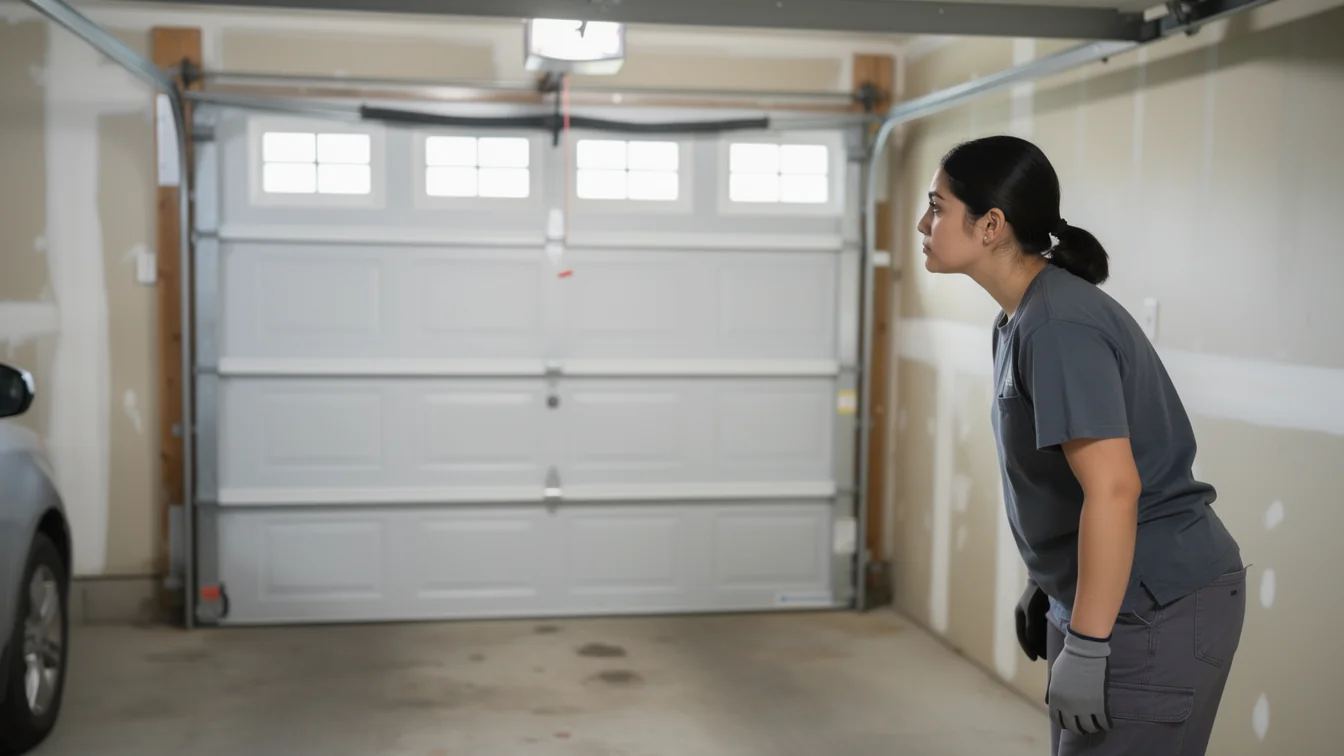
A garage door makes noise long before it breaks. On a door from this 1976-1998 housing stock, a sharp bang usually means a torsion spring is finally giving out after decades of cycles - it was wound once, at installation, and nobody's touched it since. A rhythmic thump as the door travels is often a flat spot on an original roller, steel or nylon, that's worn unevenly from thousands of open-close cycles over 30-plus years. A grinding sound near the top of the travel points to a worn bearing plate, a part that was never designed to last the life of the house. None of these are cosmetic. They're the sound of parts sized for a house built in 1986 trying to keep working in a door system nobody's rebuilt since.
When to Get Help
Call before the door stops working, not after. If you hear a new noise on a door that's original to a house built in this 1976-1998 window, get it looked at rather than waiting to see if it gets worse - with hardware this old, it generally does. A spring that's starting to sound strained under load is a two-person job and not one to troubleshoot yourself; torsion springs on doors this age carry enough tension to cause real injury. If the noise comes with the door sticking partway, binding on one side, or reversing on its own, that's usually a track or sensor issue layered on top of the age problem, and it's worth a call rather than a guess.
Leaving It Alone
Not every noise needs a truck. A light squeak that shows up on a humid day and goes away with a little lubrication on the rollers and hinges isn't an emergency - it's maintenance, and it's honestly the easiest fix there is on a door this age. We won't tell you to replace a whole door over a dry hinge. Where we draw the line is tension-bearing parts: springs, cables, the bottom bracket. Those aren't DIY, regardless of how simple the noise sounds. If you're not sure which category your noise falls into, that's a fair question to call about - we'd rather tell you it's nothing than have you find out the hard way.
Frequently asked questions
Why does my garage door suddenly sound louder than it used to?
In houses built in the 1976-1998 range that make up most of this area, it's usually cumulative wear - rollers, bearings, or spring coils that have run for decades without service. The mild local climate doesn't accelerate it the way freeze-thaw regions do, so it's slow and steady until one part finally announces itself.
Is a loud bang always a broken spring?
Not always, but it's the most common cause on original hardware from this era. A torsion spring that's cycled for 30-plus years without replacement eventually fatigues and snaps. If the door won't open or feels heavy right after the bang, assume it's the spring and don't force it.
Can I just oil the hinges myself?
Yes, and you should - a light lubricant on hinges and rollers is routine upkeep, not a repair. Just stay away from the spring and cable hardware. Those carry real tension and aren't a homeowner fix, no matter how minor the noise sounds.
Related garage door services in DeLand
More garage door guides
Book garage door service in DeLand
Call now or request a quote - tell us what the door is doing and where you are.